How to Make Money from Crafts: Turning Your Creative Skill into a Profitable Small Business
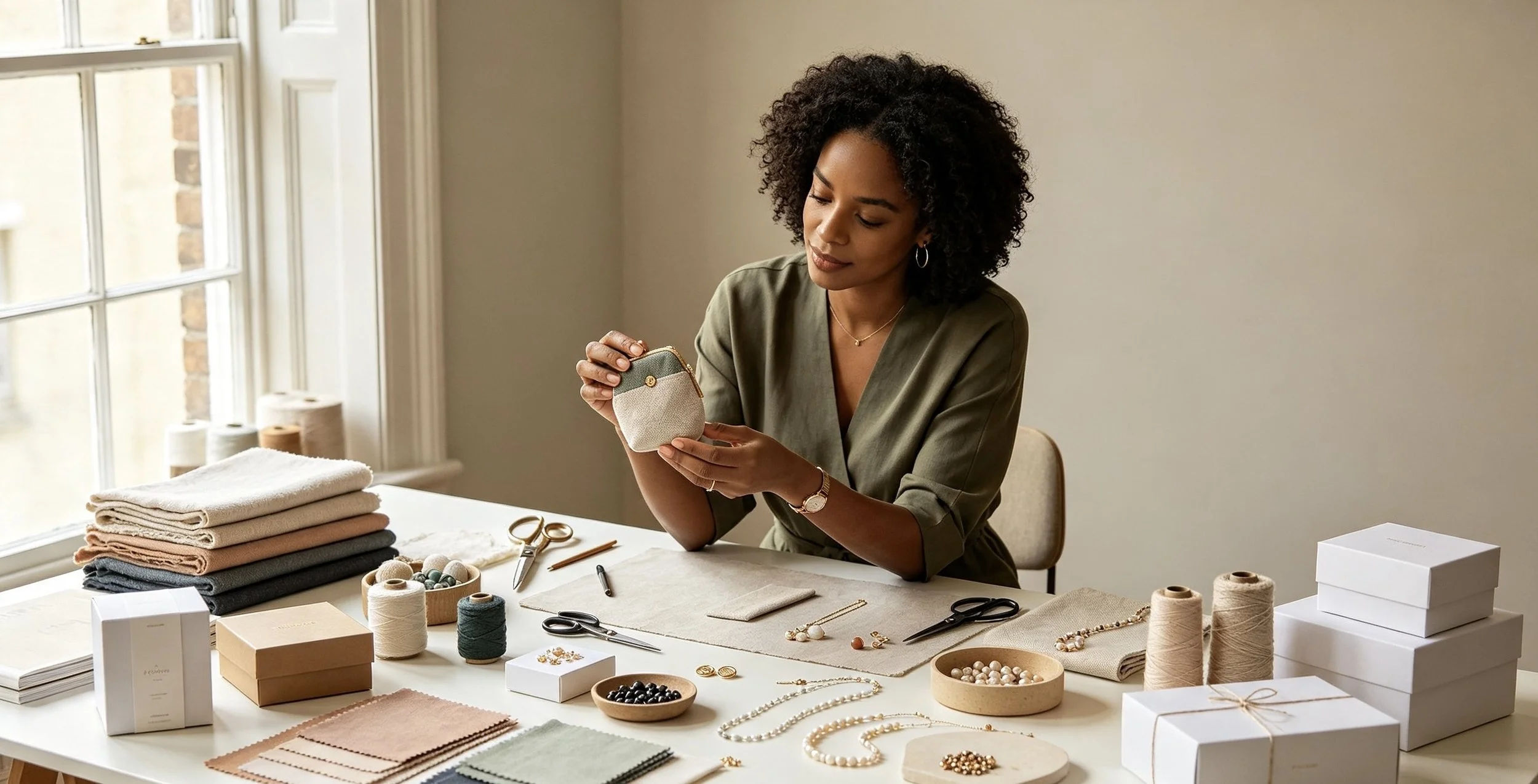
Can you really make money from crafts?
Absolutely.
Yet there is a common belief among makers and creatives that “craft people don’t make money.” You may have heard it yourself: “People don’t want to pay that much,” “Craft doesn’t pay,” or “It’s only a hobby.”
But perhaps the problem isn’t the craft.
Perhaps the problem is the business behind the craft.
A beautiful product does not automatically become a profitable product. Being talented does not automatically create income. And simply putting handmade products on a table and waiting for customers does not necessarily build a sustainable business.
The good news is that your creative skill can become a source of income when you begin to think not only like a maker, but also like a business owner.
Craft Can Be More Than a Hobby
Crafting is often treated as something people do in their spare time.
There is absolutely nothing wrong with crafting as a hobby. But if you want to make money from crafts, you have to make a deliberate decision to move from creating for enjoyment to creating with a business purpose.
That doesn’t mean losing the joy or creativity that made you start.
It means asking different questions.
Who is my customer?
What problem does my product solve?
What makes my work different?
What is my product actually worth?
How much does it cost me to make?
And, most importantly:
Am I making a profit?
These questions can completely change the way you approach your craft.
Why Many Crafters Struggle to Make Money
One of the biggest challenges in a craft business is that makers often focus heavily on the product and not enough on the business.
You might spend hours perfecting a handmade item, but if you haven’t calculated your materials, time, packaging, marketing, selling fees and other business costs, you may be making sales without actually making money.
That’s an important distinction.
Revenue is not the same as profit.
You can have a busy month, sell lots of products and still discover that very little money is left after your expenses.
This is why understanding your numbers matters.
The Crafts Council recommends considering materials, time, overheads, distribution and other costs when pricing creative work. (Crafts Council)
The First Step: Stop Undervaluing Your Skill
One of the biggest mindset shifts a craft business owner can make is learning to value their own skill.
Your customer isn’t simply buying a piece of fabric, a candle, a piece of jewellery, a painting or a handmade accessory.
They are buying your:
Skill
Time
Creativity
Experience
Design
Attention to detail
Materials
Product development
Presentation
And behind the finished product there may also be photography, packaging, marketing, customer communication, travel, administration and selling costs.
Your price needs to reflect the business required to produce and sell the product — not just the raw materials.
Start Up Loans similarly recommends accounting for labour, materials, overheads and other selling costs when pricing handmade products. (Start Up Loans)
Not Every Craft Product Is a Good Business Product
This is another important lesson.
Just because you enjoy making something doesn’t necessarily mean it is commercially viable.
That doesn’t mean you should stop making it.
It means you should ask whether there is a market for it at a price that makes the business worthwhile.
A product might take five hours to make but only have a realistic selling price of £30.
Another product might take 30 minutes to make and have a strong demand at £20.
Both are creative.
But they are very different businesses.
This is why successful craft businesses don’t simply ask:
“What do I enjoy making?”
They also ask:
“What do people want, and can I make it profitably?”
Find Your Customer
You don’t need everyone to buy your products.
In fact, trying to appeal to everyone can make it harder to build a strong brand.
Think about the person who is most likely to appreciate what you create.
What do they buy?
What occasions are they buying for?
What price range are they comfortable with?
What makes them choose handmade rather than mass-produced?
What would make them recommend your product to someone else?
The clearer you become about your customer, the easier it becomes to make decisions about your products, pricing, presentation and marketing.
Make Your Products Easier to Buy
Sometimes the problem isn’t the product.
It’s the way the product is presented.
A potential customer needs to understand quickly:
What is it?
Why do I want it?
Who is it for?
How much is it?
Why should I buy it from you?
Clear photographs, good packaging, understandable descriptions and visible pricing can make a significant difference.
You don’t necessarily need an expensive website or a huge marketing budget to begin.
You need to make it easy for the right customer to understand and buy what you offer.
Don’t Compete With Mass Production
One mistake handmade businesses can make is trying to compete with mass-produced products purely on price.
You probably won’t win that battle.
A handmade product is not produced in the same way as something manufactured thousands of times in a factory.
Your advantage is different.
It may be:
Originality.
Personalisation.
Craftsmanship.
Story.
Quality.
Limited production.
The human connection behind the product.
Your job is not necessarily to be the cheapest.
Your job is to communicate why your product is worth buying.
Test Before You Invest Too Much
You don’t have to build a huge business overnight.
One of the smartest things a new craft business owner can do is test an idea before investing heavily in it.
Make a small quantity.
Show potential customers.
Listen to their feedback.
Watch what attracts attention.
Pay attention to what actually sells.
Then learn from the results.
Your first product may not be your best product.
Your first price may not be your best price.
Your first market may teach you more than months of guessing.
That’s not failure.
That’s market research.
Build More Than One Route to Your Customer
A craft business doesn’t have to depend entirely on one way of selling.
Depending on your product and target customer, you may eventually explore different routes, such as direct sales, online selling, collaborations, commissions, wholesale opportunities, events or other suitable channels.
The important thing is not to copy somebody else’s business model.
Build one that makes sense for your craft, your customer and your capacity.
Remember: Your Time Is Part of the Cost
This deserves special attention.
Many makers calculate the cost of fabric, beads, wax, clay, thread or other materials — and then forget themselves.
Your time has value.
If a product takes three hours to create, those three hours are part of the cost of producing it.
And don’t forget the time that happens outside the making process.
Think about:
Designing
Buying materials
Preparing products
Photographing
Packaging
Posting
Marketing
Answering enquiries
Travelling to markets
Setting up displays
Administration
A craft business can become exhausting when the owner is working constantly but isn’t paying themselves properly.
Profit Is Not Greed
Some creative people feel uncomfortable talking about money.
They worry that charging more somehow makes their creativity less authentic.
It doesn’t.
Profit allows a small business to survive.
Profit allows you to buy better equipment, replace materials, improve your products, invest in marketing, pay your bills and continue creating.
Without enough margin, your craft business can quickly become a demanding hobby that pays everyone except you.
The goal isn’t simply to sell.
The goal is to build something sustainable.
You Don’t Need to Be a Business Expert to Start
You don’t need to know everything on day one.
You can learn.
Learn your numbers.
Learn about your customers.
Learn how to communicate your value.
Learn how to price.
Learn how to sell.
Learn from products that don’t work.
Learn from customers who say no.
Learn from customers who come back.
And keep improving.
The transition from crafter to business owner is a journey.
So, Can You Make Money from Crafts?
Yes.
But making money from crafts isn’t simply about being good at what you do.
It’s about combining creativity with commercial thinking.
It’s understanding that your craft has value — and learning how to communicate, price and sell that value.
There will be slow periods.
There will be products that don’t sell.
There will be customers who think your prices are too high.
There will be moments when you question whether it is worth continuing.
That is part of building a small business.
But don’t let somebody else’s experience convince you that your craft cannot make money.
Perhaps they haven’t found the right customer.
Perhaps their pricing isn’t sustainable.
Perhaps their product needs to change.
Perhaps they haven’t marketed it effectively.
Perhaps they simply haven’t been in business long enough.
“Craft doesn’t make money” is not a business strategy.
Understanding your customer, knowing your numbers, creating something people value and consistently improving your offer is.
Your Craft Has Potential
If you already have a creative skill, don’t underestimate what you have.
Your hands can create.
Your creativity can solve problems.
Your knowledge can have value.
And your passion can potentially become an income stream.
You don’t have to turn every hobby into a business.
But if you want to, don’t be afraid to think bigger.
Don’t just ask, “Can I make this?”
Ask:
“Can I build a business around this?”
That is where the journey from crafter to entrepreneur begins.
About Skilled Hands
At Skilled Hands, we believe practical creative skills can open doors to confidence, opportunity and economic independence.
Whether you are developing a new craft skill or thinking about taking your creativity more seriously, remember that becoming a successful maker is not only about what you create.
It is also about understanding the value behind what you create.
Your craft has value. Learn to build the business around it.