
How to Start a Creative Business From Scratch — Even If You Have Little Money
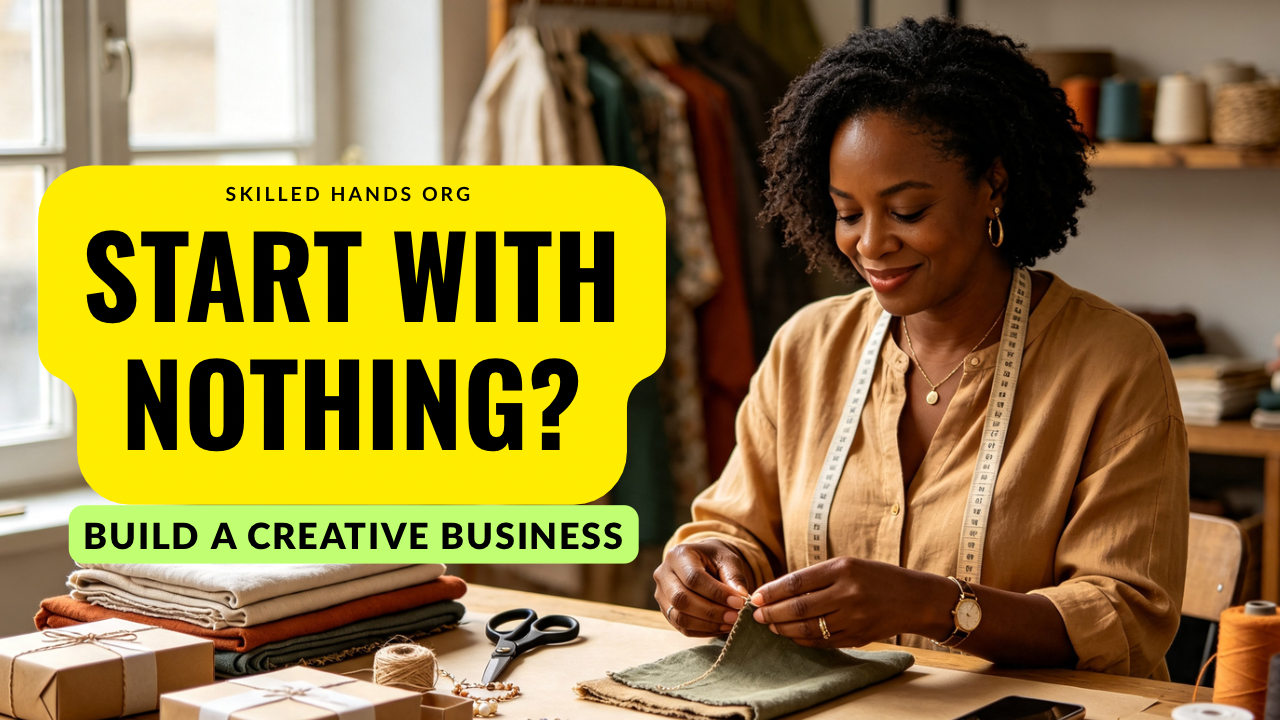
Have you ever looked at something you’ve made and thought:
“I could actually sell this.”
Maybe you sew clothes or bags. Perhaps you make jewellery, candles, artwork, baked goods, beauty products or home décor. Maybe you’re good at photography, graphic design, hair, crafts or another creative skill.
You have the skill.
You have the passion.
You may even have people telling you:
“You should sell these!”
But then reality kicks in.
Where do I start?
How much money do I need?
What should I sell?
Who would buy it?
Do I need a website?
Do I need a business name?
What if nobody buys?
And perhaps the biggest question of all:
Can I really turn my creative skill into a business?
The answer is yes.
But starting a creative business doesn’t mean you need to have everything figured out before you begin.
In fact, starting small may be one of the smartest things you can do.
You Don’t Need a Perfect Business to Start
One of the biggest mistakes aspiring creative entrepreneurs make is believing they need to look like an established business before they can begin.
They think they need:
A professional website
Hundreds of products
Expensive equipment
Professional photography
A large social media following
Lots of money
A perfect logo
A huge workspace
You don’t necessarily need all of that at the beginning.
What you need is something people want.
Your first goal isn’t to build a huge business overnight.
Your first goal is to find out whether somebody is willing to pay for what you can create.
That changes everything.
1. Start With the Skill You Already Have
Look at what you can already do.
What do people regularly ask you to make?
What do friends compliment you on?
What do you enjoy making?
What skill have you developed over time?
Your starting point doesn’t have to be something completely new.
It might be something you’ve been doing as a hobby for years.
Perhaps you’ve been sewing for yourself.
You’ve been making jewellery for friends.
You’ve been baking for family occasions.
You’ve been creating artwork.
You’ve been making handmade gifts.
Don’t underestimate the skills you already possess simply because they come naturally to you.
What feels ordinary to you may be valuable to someone else.
2. Don’t Try to Sell Everything
When people first start a creative business, they can become excited and want to make everything.
If you sew, you might want to make clothes, bags, cushions, children’s items and accessories.
If you make jewellery, you might want necklaces, bracelets, earrings, rings and personalised gifts.
But starting with too many products can make your business confusing — and expensive.
Instead, start with one clear offer or a small collection of related products.
Give yourself the opportunity to learn:
What people like
What people don’t like
What they are willing to pay
What takes too long to make
What is profitable
What you actually enjoy selling
You can expand later.
3. Find the Person Who Is Most Likely to Buy
Having a creative skill is one thing.
Having a customer is another.
You need to think beyond:
“I want everyone to buy this.”
Who is your product actually for?
Is it for busy parents?
Brides?
Gift buyers?
Young professionals?
People looking for personalised products?
Homeowners?
Businesses?
People looking for sustainable alternatives?
Someone buying a present for a special occasion?
The more clearly you understand your customer, the easier it becomes to create and communicate your offer.
4. Test Your Idea Before Spending Lots of Money
This is particularly important if you’re starting with limited funds.
Don’t spend money simply because you feel like a proper business should have certain things.
Test first.
You could:
Show your product to potential customers.
Take a small number of pre-orders.
Sell at a local market.
Take enquiries through social media.
Offer a small workshop.
Create a simple online listing.
Ask potential customers what they would actually buy.
Your first customers can teach you things that no business course can.
They tell you what people value.
They show you what sells.
And sometimes they reveal that the product you thought would be your bestseller isn’t the one people want.
That’s valuable information.
5. Know Your Numbers
This is where creativity needs to meet business.
Being good at your craft doesn’t automatically mean you’re making money.
You need to know what it costs you to produce something.
Think about:
Materials + packaging + your time + overheads + selling costs + other expenses = your real cost.
Then you need to consider your selling price and profit.
Don’t make the mistake of thinking:
“I bought the materials for £5, so if I sell it for £10, I’ve made £5.”
What about your time?
Your equipment?
Electricity?
Packaging?
Travel?
Website fees?
Market fees?
Marketing?
Payment processing?
These costs can quickly add up.
A creative business needs creativity — but it also needs financial awareness.
And this is something we’ll explore in the next part of this series: how to price your handmade products properly.
6. You Don’t Need Thousands of Followers
Another misconception is that you need a huge social media audience before you can start selling.
You don’t.
You need the right people.
One hundred people who genuinely want what you offer can be more valuable than thousands of people who simply scroll past your content.
Start by telling people what you do.
Show your process.
Show your finished products.
Explain the problem you solve.
Show how your product is used.
Share customer feedback.
Tell your story.
And most importantly:
Give people a reason to buy.
7. Start Selling Before Everything Is Perfect
Perfection can become a very expensive form of procrastination.
You keep thinking:
“I’ll launch when my website is ready.”
Then:
“I’ll launch when I have better packaging.”
Then:
“I’ll launch when I have more products.”
Then:
“I’ll launch when I have more followers.”
And suddenly, six months have passed.
Your first version doesn’t have to be your final version.
Start. Learn. Improve. Repeat.
Your business will become clearer as you go.
8. Reinvest Instead of Trying to Look Big
When you start making money, you don’t necessarily need to spend it all trying to make your business look established.
Some of your early income can go back into the business.
Better equipment.
More materials.
Better packaging.
Training.
Marketing.
Photography.
Your website.
Whatever genuinely helps you improve your business.
Growth doesn’t have to happen all at once.
Small, consistent improvements can build something substantial over time.
9. Be Prepared for the Emotional Side
Starting a creative business isn’t only about money.
There will be moments when you question yourself.
There may be weeks when you don’t sell anything.
Someone might tell you your price is too high.
Someone else might copy your idea.
You may have a product you love that nobody seems interested in.
You may feel overwhelmed because suddenly you’re not just the creative person.
You’re also the marketer.
The salesperson.
The accountant.
The customer-service person.
The administrator.
And sometimes, the cleaner!
This is one of the realities of running a small business.
But it doesn’t mean you’ve made the wrong decision.
It means you’re learning how to run a business.
10. Start With What You Have
Perhaps you don’t have thousands of pounds.
Perhaps you don’t have a studio.
Perhaps you don’t have a huge audience.
Perhaps you don’t even have a business plan yet.
Start with what you do have.
Your skill.
Your creativity.
Your knowledge.
Your existing equipment.
Your network.
Your experience.
Your willingness to learn.
And most importantly:
your ability to start.
You don’t need to start big.
You need to start intelligently.
Final Thoughts
There is something incredibly powerful about turning something you know how to do with your hands, your mind or your creativity into an income stream.
But don’t believe the idea that starting a creative business means everything will suddenly become easy.
It won’t.
There will be uncertainty.
There will be mistakes.
There will be slow periods.
There will be moments when you wonder whether you should continue.
But there will also be something incredibly rewarding about seeing someone choose something you created.
Your first sale may not change your life financially.
But it can change the way you see your skill.
Because suddenly, something that was once just a hobby has become something somebody is willing to pay for.
And that is where the journey begins.
You don’t need to have everything before you start.
Start with what you have.
Learn what you don’t know.
Listen to your customers.
Keep improving.
And keep going.
Because your creative skill could be more than a hobby.
It could become a business.
